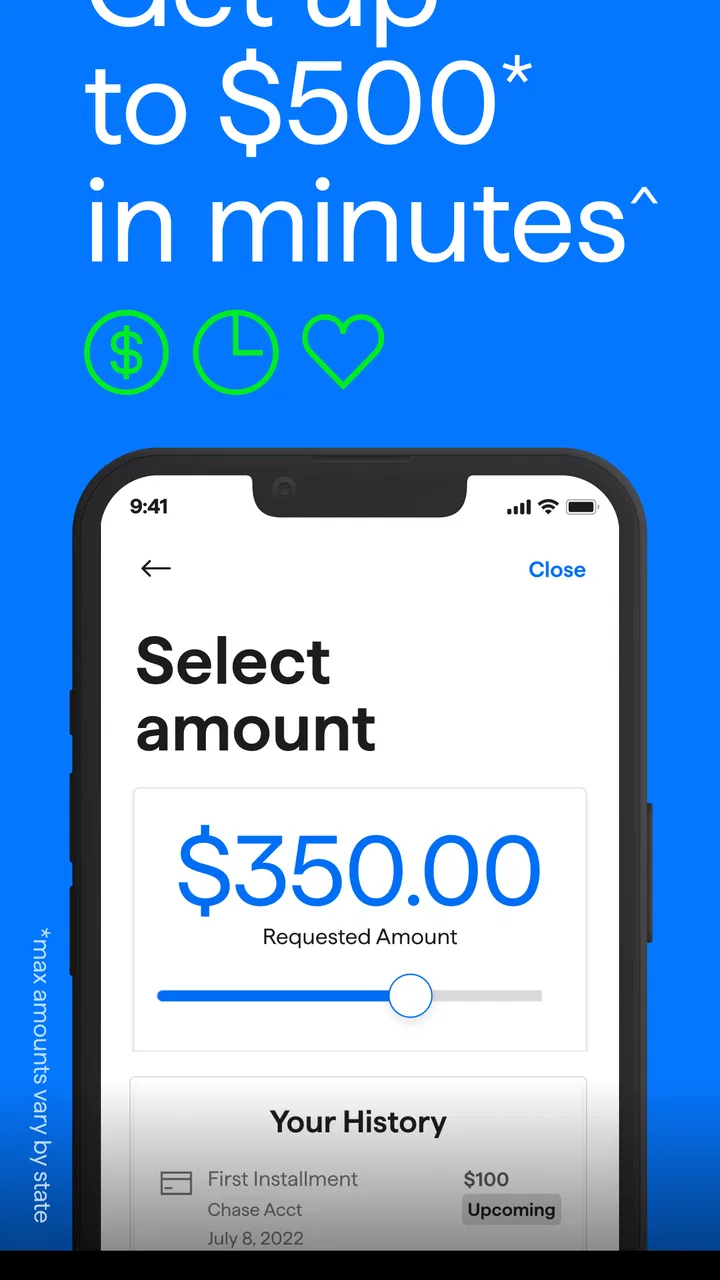
Possible: Fast Cash & Credit
- 4.4
- Rating
- 1.00M
- Installs
- Free
- Price

 Analysis by App-foxy
When an unexpected bill lands between paydays, I understand why an app promising quick access to cash can feel appealing. Possible: Fast Cash & Credit is a finance app from Possible Finance - A Public Benefit Corporation that focuses on short-term access to money and flexible repayment, while also presenting itself as a way to build credit. I approached it less like a simple cash button and more like a financial tool that deserves careful attention before connecting an account.
My overall impression is that Possible is most useful for someone facing a specific, temporary gap and willing to read every repayment detail before accepting an offer. It is free to install, available to everyone by age rating, and has reached over one million installs. Those facts show that it is not an obscure experiment, but popularity should not replace personal affordability checks. A cash advance can solve today’s problem and create a larger one if the repayment schedule does not fit the next few weeks.
How Possible fits into short-term borrowing
The app sits in the finance category, but it is not a replacement for a full bank account, a budgeting suite, or a long-term credit-building plan. Its central appeal is speed and flexibility: a user can explore access to cash, review repayment arrangements, and use the service for an immediate need rather than applying for a traditional personal loan.
You May Also Like

 Blood Strike: 2.5 Anniversary
Blood Strike’s Loadouts Turn Every Drop Into a Tactical Gamble
A close look at Blood Strike’s custom loadouts: how fast access to signature weapons reshapes its battle royale rhythm, rewards preparation, and narrows the gap between fights.

 Pandora - Music & Podcasts
Pandora’s Music Is Easy to Start, but Harder to Recover
Pandora’s strength is its low-effort path from a seed to a station. Its weak spot is how much confidence it asks you to place in connection, setup, and quiet recovery.

 8 Ball Pool
 Is Built on Rivalries, Rematches, and Routine
A close look at the rivalries, rematches, shared routines, and unanswered safety questions that turn a quick pool match into a persistent mobile community.

 Samsung Music
’s Quiet Strength Is Playing What You Already Own
Its reach comes less from spectacle than from dependable access to a personal library. That simplicity is both the app’s strongest retention engine and its ceiling.

 AccuWeather: Weather Radar
AccuWeather Review: A Quick, Clear Forecast for Everyday Decisions
For everyday plans, the best forecast is the one you can understand quickly. AccuWeather makes rain timing, radar, and local conditions easy to act on, with a few trade-offs.

 Hill Climb Racing
Why Hill Climb Racing Still Turns Crashes Into One More Run
A tiny car, a bumpy hill and one more upgrade: Hill Climb Racing keeps resurfacing because its simple chaos makes every near-miss feel personal.
More From Our News Desk



That distinction matters. A conventional bank may offer established overdraft tools, savings products, or a credit card with a broader set of controls. A credit union may provide more personal support and different underwriting. A budgeting app may help prevent the emergency in the first place without lending money at all. Possible belongs in the narrower space between those options: it is designed around getting through a short cash-flow problem, not managing every part of your financial life.
In everyday terms, I would think about using it for a necessary expense that I already know how to repay, such as covering a timing mismatch before a regular income arrives. I would not treat it as spare spending money or as a way to repeatedly stretch an income that is already committed. The phrase “flexible payments” sounds useful, but flexibility only helps when the underlying budget has enough room for the obligation.
The developer’s public-benefit identity may make the service feel more mission-oriented than a typical lending brand, but I would still judge the app by the choices it shows me during enrollment and repayment. Trust is not something I would grant automatically because of a name or description. I would look for clear explanations, understandable account controls, and enough information to decide without feeling rushed.
The app has an average rating of 4.4 from around 61 thousand ratings, with roughly 29 thousand written reviews. That is encouraging as a sign that many people have found the experience worthwhile, but ratings are not a substitute for checking whether the product suits my own income pattern. Someone praising fast access may have a very different repayment situation from someone trying to avoid recurring borrowing.
The first setup deserves more attention than the download
Possible is free to download, which removes an initial price barrier, but “free” should not be confused with cost-free borrowing. Before proceeding, I would read the complete offer shown in the app, including the repayment dates, any displayed charges, and what happens if a payment cannot be made. The important question is not simply how quickly money becomes available; it is how the full commitment fits alongside rent, food, transport, subscriptions, and other fixed obligations.
I would also take my time with account connection and identity steps. Finance apps commonly need enough information to assess eligibility and move money, so I would check each permission and consent screen rather than tapping through automatically. If the app asks me to connect a bank account, I would confirm that I am selecting the correct account and understand what information or access is involved. I would avoid using a shared device and would protect the phone with a strong screen lock.
One practical habit makes a big difference: I would write down the expected repayment dates before accepting anything. Seeing the dates outside the app helps reveal conflicts that are easy to miss when focusing on the amount offered. If a repayment falls just before a paycheck or alongside another automatic bill, the supposedly convenient advance may be a poor fit.
The current version is 2.4.2 and requires at least operating system version 10. That makes compatibility a straightforward check before spending time on registration. I would also keep the app updated through the official store, particularly for a finance product where account access and security depend on the phone environment as well as the service itself.
Controls I would verify before accepting money
The most important control is the ability to understand and manage repayment. I would look for a clear view of the amount due, the dates involved, and the status of each payment. If a screen presents several actions, I would distinguish between reviewing an offer, accepting it, changing a payment arrangement, and closing an account. Those are not interchangeable decisions.
I would also check how notifications work. Reminders can be helpful, especially when a repayment is scheduled weeks after the original advance, but I prefer notifications that tell me what is due without exposing sensitive financial information on a lock screen. If the phone is used by family members or coworkers, I would review notification previews and adjust them where the operating system allows it.
Another useful control is record keeping. I would save or otherwise retain confirmation screens and repayment information in a secure place, not because I expect a problem, but because a personal record makes it easier to reconcile the account with my bank statement. A screenshot should not include more personal information than necessary, and it should be stored somewhere protected rather than in a casually shared photo folder.
If I decided the service was no longer appropriate, I would want to know how to stop using it, remove unnecessary connected access, and contact support about any remaining obligation. Closing an app is not the same as resolving an account. I would look for account-management and support paths inside the product before deleting anything, since removing the icon does not cancel a repayment arrangement.
These details are where I separate a genuinely manageable borrowing experience from a stressful one. A fast application is convenient, but a good finance tool should also make the less exciting tasks—checking status, understanding a payment, and finding help—easy to perform.
Where privacy and data choices matter most
The most sensitive moments happen before the cash is available. Linking a financial account, confirming identity, and reviewing eligibility all involve information that I would not share casually. I would read the consent language presented in the app and pay attention to what I am authorizing at each step, rather than assuming every request is required for every feature.
I would also consider the difference between necessary service access and optional communication. If the app offers marketing messages, promotional notifications, or other choices separate from essential account notices, I would make those decisions deliberately. Keeping essential repayment reminders while declining unnecessary promotional contact is a sensible balance when the controls are available.
Device hygiene matters here too. I would avoid installing the app on a rooted or modified phone, use a current operating system, and never share one-time codes or login details with another person. I would be cautious with public Wi-Fi during account actions and would check that the app is the genuine listing from Possible Finance - A Public Benefit Corporation before entering financial information.
I would not assume that deleting stored data from my phone deletes records held by the service, nor would I assume that uninstalling the app ends communication. Those are separate questions. If I wanted to understand retention, account closure, or privacy choices, I would use the in-app support or privacy information and keep a note of any request I submitted.
This is also why I would avoid signing up merely to see what might be available. A finance application is not a harmless browsing session in the same way as trying a casual game. I would begin only when I had a genuine reason, enough time to read the screens, and a clear plan for what I would do with the money and how I would repay it.
Building credit requires a realistic expectation
The credit-building promise is potentially valuable, but I would treat it as a possible outcome that depends on the product’s terms and my own payment behavior, not as an instant repair service. Making payments on time can be constructive when the arrangement is reported in a way that supports a credit history, but I would check the app’s current explanations rather than relying on a general assumption.
I would not borrow solely to create a credit record if the repayment would strain my budget. A missed or late payment can be more damaging to peace of mind than the potential benefit is worth, and no app can make an unaffordable commitment safe. For someone with stable finances who wants to build credit, a secured card, credit-builder product, or credit union option may be worth comparing. Those alternatives can have different structures, reporting practices, and support.
One non-obvious trade-off is that flexible payment timing can make an obligation feel less immediate, which is helpful for cash flow but risky for memory. I would add the dates to my calendar and leave enough money untouched before each due date. I would also avoid taking another advance to cover the first one. That pattern turns a short-term bridge into a cycle and defeats the purpose of using the tool carefully.
Another practical point is to compare the app with doing nothing for a day or two. Asking a bill provider for a due-date adjustment, using an existing emergency fund, or speaking with a credit union may take more effort but could reduce the total cost or pressure. Possible is most compelling when those options are unavailable or slower and the repayment plan remains comfortably manageable.
A realistic use case—and when I would walk away
Imagine I have a necessary car repair and my regular income arrives shortly after the invoice is due. I would first confirm the repair is essential, ask whether the provider offers a payment arrangement, and check my available savings. If those routes do not work, I would open Possible, review the amount and schedule, and compare the repayment dates with my next income and existing automatic withdrawals.
If the schedule leaves a clear buffer after essentials, I might consider proceeding. I would then keep the repayment information, set calendar reminders, and monitor my bank balance rather than assuming the app would solve everything automatically. Once the need passed, I would avoid treating the available borrowing capacity as part of my normal monthly income.
I would walk away if the amount offered did not cover the actual need but still created a repayment burden, if the dates conflicted with rent or utilities, or if I could not understand the total commitment. I would also skip it if I was already using one short-term loan to pay another. In those situations, free debt advice, a nonprofit counselor, an employer advance, or a conversation with creditors may be more appropriate than another app-based advance.
The same caution applies to people with irregular income. Flexible payments may sound attractive, but variable earnings make fixed obligations harder to predict. A user whose income changes from week to week should calculate using a low-income month, not an optimistic one. If the payment works only when everything goes perfectly, it is not a safe payment plan.
What the public track record tells me—and what it does not
Possible has been available since January 2018, and its audience has grown beyond one million installs. I see that longevity and adoption as useful context, not proof that every user will have the same experience. The finance category is personal: approval, repayment comfort, account connectivity, and support needs can vary substantially between people.
The Everyone age rating makes the app broadly accessible from a content-classification perspective, but it does not mean every financial situation is suitable for borrowing. I would still consider income stability, existing commitments, and whether I can handle the repayment without cutting essentials. Accessibility and affordability are different questions.
The large number of ratings and written reviews can help identify recurring themes, but I would read recent comments with a specific purpose. I would look for experiences involving repayment visibility, account access, support responsiveness, and closing or changing arrangements. I would be careful with reviews that focus only on how quickly money arrived, because speed is only one part of a responsible borrowing decision.
I also would not compare the app with a traditional loan using the headline amount alone. The meaningful comparison includes timing, total cost, repayment flexibility, credit consequences, data-sharing choices, and what happens when circumstances change. Possible may win on convenience for a short gap, while a bank, credit union, or savings option may be better for a larger or longer-term need.
My cautious verdict
I see Possible: Fast Cash & Credit as a focused tool for a narrow problem: a temporary cash shortage where I have a credible repayment plan and need a digital application experience. Its free installation, broad availability, and emphasis on flexible payments make it worth investigating for that situation. The credit-building angle may add value, but I would never let that promise persuade me to borrow money I cannot comfortably repay.
My recommendation comes with conditions. Read every offer, record the repayment schedule, inspect account and notification controls, and make privacy choices consciously. Treat connected-bank access and identity steps as serious moments, not routine taps. If the app makes any part of the commitment unclear, I would pause and compare alternatives rather than relying on urgency.
For someone facing a one-off essential expense, Possible may be a practical bridge. For someone with recurring shortfalls, unpredictable income, or existing repayment stress, I would choose support and a broader financial plan instead. The best use of this app is a planned exception, never a substitute for sustainable income or an emergency fund.
That is where my trust lands: cautiously positive, but dependent on user control. I would use it only when the numbers work before the money arrives, the data choices are understandable, and I can see a clean path to repayment and account management. In that context, the app can be useful; outside it, the usual alternatives deserve a closer look.
FAQs for Possible: Fast Cash & Credit
01What is Possible: Fast Cash & Credit?
Possible: Fast Cash & Credit is a financial app designed to provide users with quick access to short-term loans and credit. It’s tailored for individuals who need immediate financial assistance and offers an easy application process directly from your smartphone. The app aims to offer a transparent and user-friendly experience.
02How does the application process work?
The application process is straightforward and can be completed in just a few minutes. Users need to download the app, create an account, and provide some basic personal information. Once your information is verified, you can apply for a loan. Approval decisions are made quickly, often within minutes.
03What are the interest rates and fees associated with loans?
The interest rates and fees vary depending on the loan amount and the user’s credit profile. The app provides a clear breakdown of all costs before you accept a loan, ensuring transparency. It’s crucial to review these terms carefully to avoid any surprises and to understand the total repayment amount.
04Is my personal information secure with Possible Finance?
Yes, Possible Finance takes the security of your personal information seriously. They use advanced encryption and security measures to protect your data. However, it’s always advisable to review their privacy policy to understand how your information is used and stored.
05Can I improve my credit score with Possible: Fast Cash & Credit?
Yes, using Possible: Fast Cash & Credit responsibly can help improve your credit score. The app reports your repayment activity to major credit bureaus, so timely payments can positively impact your credit profile. It’s a useful tool for those looking to build or repair their credit history.
Pros
- Quick approval process for loans.
- User-friendly interface and navigation.
- Multiple loan options available.
- Secure payment and transaction system.
- Responsive customer support team.
Cons
- Interest rates can be high.
- Limited repayment flexibility.
- Requires access to personal data.
- App may have occasional bugs.
- Not available in all regions.

Possible: Fast Cash & Credit
Gallery